If you’ve ever walked into a gym and wondered which machine can take your chest workout to the next level, look no further than the plate chest press. Often overshadowed by its more popular cousin—the Smith machine or free-weight bench press—this underrated piece of equipment offers unique benefits for both beginners and seasoned lifters. In this blog, we’ll break down everything you need to know about the plate chest press: how it works, why it’s worth adding to your routine, and how to use it safely and effectively.
What Is a Plate Chest Press?
Why Add the Plate Chest Press to Your Workout?
How to Use the Plate Chest Press: Step-by-Step Guide
Common Mistakes to Avoid
Advanced Tips for Lifters
Final Thoughts
What Is a Plate Chest Press?
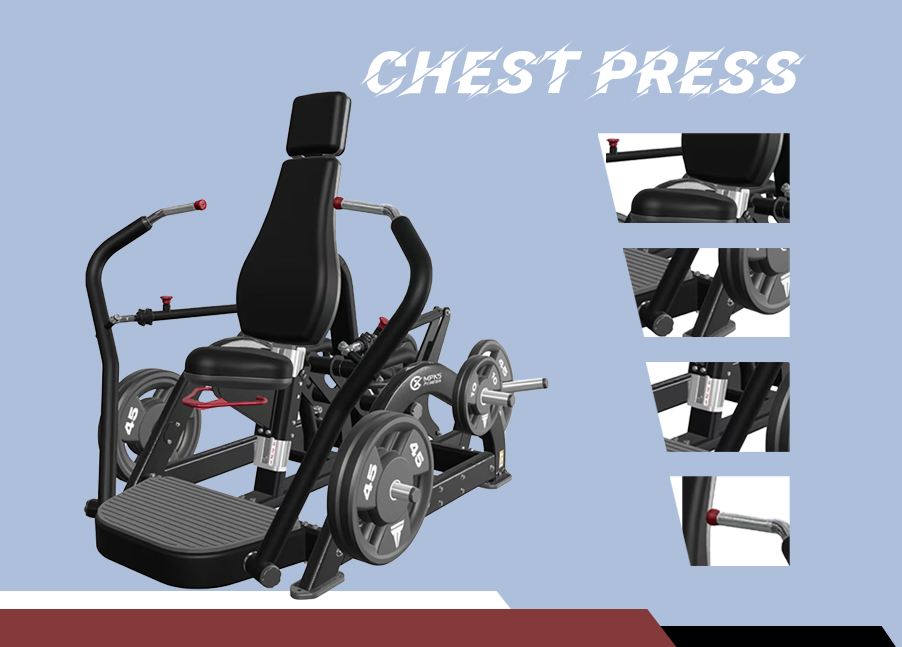
First, let’s clarify what a plate chest press is. Unlike cable chest presses or selectorized machines (where you adjust weight via a pin), the plate chest press requires you to load standard weight plates onto pegs attached to the machine’s arms. It features a padded seat, backrest, and two horizontal bars (or “arms”) that move forward as you push. The machine is designed to isolate your chest muscles while providing stability—making it a great alternative to free weights if you’re recovering from an injury, new to lifting, or simply want to target your chest without straining your shoulders or core.
Why Add the Plate Chest Press to Your Workout?
You might be thinking: Why not just stick to bench presses? While free-weight bench presses are fantastic for overall upper-body strength, the plate chest press offers distinct advantages:
- Reduced Joint Strain
The fixed path of the machine’s arms means you don’t have to worry about balancing the weight (unlike a barbell). This takes pressure off your shoulders, wrists, and elbows—perfect for anyone with joint discomfort or a history of injuries. For example, if you’ve had a shoulder impingement, the plate chest press lets you work your chest without putting your rotator cuff at risk.
- Targeted Chest Activation
Because the machine stabilizes your body, you can focus solely on contracting your chest muscles (pectoralis major and minor) rather than engaging your core or back to keep the weight steady. This isolation helps build muscle definition and ensures you’re not compensating with other muscles (a common issue with free-weight presses).
- Controlled Eccentric Movement
The eccentric (lowering) phase of a chest press is just as important as the concentric (pushing) phase for muscle growth. The plate chest press’s smooth, guided motion lets you slow down the lowering phase—maximizing muscle tension and reducing the risk of dropping the weight (a common problem with dumbbells or barbells).
How to Use the Plate Chest Press: Step-by-Step Guide
Using the plate chest press correctly is key to avoiding injury and getting the most out of your workout. Follow these steps:
1. Adjust the Machine to Your Body
- Seat Height: Sit on the padded seat and adjust the height so that your elbows are bent at a 90-degree angle when you grip the handles. Your forearms should be parallel to the floor—this ensures your chest is the primary muscle working.
- Backrest: Lean back against the padded backrest and keep your feet flat on the floor. Engage your core slightly to stabilize your torso (you don’t want to arch your back excessively).
2. Load the Weight Plates
- Choose a weight that challenges you but allows you to complete 8–12 reps with good form. Start light if you’re new to the machine—you can always add more weight later.
- Slide the weight plates onto the pegs on both sides of the machine’s arms. Make sure the plates are secure (some machines have clips to hold them in place—use these to prevent the plates from sliding off).
3. Grip the Handles and Prepare to Press
- Grip the handles with an overhand grip (palms facing away from you) slightly wider than shoulder-width apart. Keep your wrists straight—avoid bending them forward or backward.
- Take a deep breath in and brace your core. Your shoulders should be relaxed (not hunched up toward your ears) and your chest should be lifted.
4. Perform the Press
- Exhale as you push the handles forward until your arms are almost fully extended (don’t lock your elbows—keep a slight bend to protect your joints).
- Pause for 1 second at the top of the movement, focusing on squeezing your chest muscles.
- Inhale as you slowly lower the handles back to the starting position (90-degree elbow bend). Take 2–3 seconds to lower the weight—this controls the eccentric phase and boosts muscle growth.
5. Repeat and Cool Down
- Complete 3–4 sets of 8–12 reps. If you can do more than 12 reps easily, add more weight. If you struggle to finish 8 reps, reduce the weight.
- After your sets, stretch your chest (try a doorframe stretch) and shoulders to reduce soreness and improve flexibility.
Common Mistakes to Avoid
Even with a guided machine like the plate chest press, it’s easy to make mistakes that reduce results or cause injury. Here are the top errors to watch for:
- Arching Your Back: Arching your back excessively to push more weight shifts the focus from your chest to your lower back. Keep your core engaged and your back pressed against the backrest.
- Locking Your Elbows: Locking your elbows at the top of the movement puts unnecessary stress on your joints. Keep a slight bend to keep tension on your chest.
- Gripping Too Wide or Too Narrow: A grip that’s too wide can strain your shoulders, while a grip that’s too narrow shifts the focus to your triceps. Aim for a width that’s slightly wider than shoulder-width.
- Rushing the Movement: Speeding through reps (especially the lowering phase) reduces muscle activation. Slow down and focus on control—quality over quantity.
Advanced Tips for Lifters
If you’ve been using the plate chest press for a while and want to challenge yourself, try these advanced techniques:
- Drop Sets: Do a set to failure, then immediately remove a plate from each side and do another set to failure. This increases muscle fatigue and promotes growth.
- Pause Reps: Pause for 2 seconds at the bottom of the movement (when your elbows are at 90 degrees) to increase time under tension—one of the most effective ways to build muscle.
- Single-Arm Press: For better balance and unilateral muscle development, try pressing with one arm at a time. This helps correct strength imbalances between your left and right chest.
Final Thoughts
The plate chest press is a versatile, safe, and effective machine for building a stronger, more defined chest. Whether you’re a beginner looking to avoid joint strain or an advanced lifter wanting to isolate your chest, it’s a valuable addition to any upper-body workout. Remember: form always comes first—start light, master the movement, and gradually increase the weight. Your chest (and joints) will thank you!
Have you tried the plate chest press before? Share your tips or questions in the comments below!


